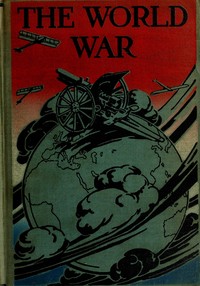
Kelly Miller's History of the World War for Human Rights opens with a striking dual promise: to deliver both a conventional war chronicle and a focused account of African American participation. The title page announces the work as “an intensely human and brilliant account” and highlights “the important part taken by the Negro in the tragic defeat of Germany.” This framing immediately sets the book apart from contemporary histories that marginalized Black soldiers. Miller, a Howard University dean, positions himself as an authoritative voice, promising to trace “the relation of the Negro to the great wars of the past” and to show that “the Negro has never been a hireling.” The opening thus establishes a clear editorial lens: the war is a struggle for human rights, and Black Americans are central to that story.
A Dual Narrative Structure
The excerpts reveal that Miller interweaves two distinct threads. One is a conventional military and political history of World War I, covering causes, alliances, and key battles. The other is a dedicated chronicle of African American service, including the unprecedented deployment of Black officers commanding troops of their own color. Miller describes this as “the most interesting chapter in the history of this modern crusade.” The book’s subtitle explicitly promises “a thrilling account of the important part taken by the Negro,” and the opening treatise announces that “the conduct of the Negro in the present struggle will be set forth with a brilliant and pointed pen.” Readers should expect these two narratives to run in parallel, with Miller shifting between broad geopolitical events and specific attention to Black soldiers’ valor.
Genealogical Digressions and Royal Context
A substantial portion of the excerpts is devoted to detailed genealogies of European royalty: the Belgian royal family, the Montenegrin dynasty, the Serbian king, and the Russian imperial house. Miller traces marriages, births, and deaths, noting, for example, that the Russian imperial family “are practically Germans by blood.” These passages serve to illustrate the tangled alliances that preceded the war. However, the genealogical material is dense and may feel digressive to a reader expecting continuous battle narrative. Miller’s method is to ground the conflict in the personal histories of monarchs, a technique that reflects early 20th-century historical writing. The excerpts do not show how these genealogies connect to the African American story, leaving that synthesis to later chapters.
Voice and Rhetorical Stance
Miller’s prose is formal, patriotic, and morally charged. He describes the war as a “modern crusade against an unholy cause” and characterizes Black soldiers as motivated by “moral energy which actuates all true heroism.” The language is consistently elevated, with phrases like “never-failing fount of loyalty and patriotism.” Miller also employs a declarative, almost promotional tone in the opening sections, as when he asserts that “the mere announcement” of his authorship “is sufficient to arouse expectancy.” This rhetorical stance suggests that the book aims not only to inform but to persuade readers of the nobility of the Allied cause and the indispensable role of African Americans. The voice is that of a public intellectual making a case, not a detached chronicler.
What the Excerpts Leave Unclear
The provided excerpts cover only the opening promotional material and a later section on royal genealogies. They do not include the actual narrative of African American combat, the discussion of specific battles, or the concluding arguments about human rights. Readers should not assume that the genealogical portion is representative of the whole; it may be a single chapter among many. The excerpts also do not reveal how Miller handles the tension between celebrating Black patriotism and acknowledging the racism Black soldiers faced. The book’s catalog subject headings—World War, 1914–1918 and African Americans—indicate that race is a central lens, but the excerpts offer no evidence of how Miller addresses discrimination, segregation, or the postwar status of Black veterans.
Readers approaching this work should be prepared for a hybrid text: part conventional war history, part racial advocacy, and part royal genealogy. Miller’s voice is consistently earnest and patriotic, and his focus on African American service is the book’s defining feature. The genealogical sections may test patience, but they reflect the author’s effort to embed the war in a broader European context. To get the most from the book, read the opening treatise carefully—it sets the terms for everything that follows.
That rainy afternoon, Kelley Miller’s chronicle of royal lineages felt strangely weighty, as if the war’s human toll hid inside those genealogical charts. Later, thumbing through Aircraft and Submarines The Story of the Invention, Development, and Present-Day Uses of War's Newest Weapons — Reading Notes, I recalled that same quiet gravity, mechanics now replacing crowns, both books whispering how progress rarely arrives gently.