
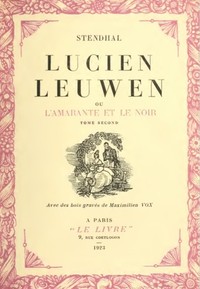
Lucien Leuwen; ou, l'Amarante et le Noir. Tome Second by Stendhal
Stendhal's Lucien Leuwen is like a friend telling you a long, detailed, and incredibly sharp story about their terrible job. This second volume picks up after Lucien's military misadventures. His wealthy, pragmatic father gets him a safe, boring post in the Interior Ministry in Paris. Lucien's job is mostly about looking busy, writing meaningless reports, and avoiding the wrath of his superiors. The plot is simple: it’s a slice of bureaucratic life. Lucien attends absurd meetings, deals with jealous colleagues, and tries to understand the byzantine social codes of the July Monarchy. His personal life gets tangled up in it all, as he pursues a beautiful, married woman, Madame de Chasteller, while also being a pawn in his father's larger political schemes. The story moves through drawing rooms, offices, and the occasional duel, all with Stendhal's trademark psychological precision.
Why You Should Read It
You should read this because Stendhal is a genius at capturing the tiny humiliations of everyday life. Lucien isn't a superhero; he's smart, sensitive, and often painfully naive. Watching him try to apply logic to an illogical system is both funny and heartbreaking. The book is less about grand historical events and more about the quiet corrosion of spirit that happens in a bad workplace. Stendhal shows us how institutions can grind down good people. He also has an amazing eye for social detail—the way someone's smile is calculated, the hidden meaning behind a glance. It’s a political novel, but the politics are personal. You feel the stifling atmosphere of Paris in the 1830s, a place obsessed with money and status.
Final Verdict
This book is perfect for anyone who loves character-driven stories and sharp social observation. If you enjoyed the witty cynicism of Jane Austen or the psychological depth of Dostoevsky, you'll find a kindred spirit in Stendhal. It's especially great for readers who think classic novels are stuffy—this one is witty, fast-paced, and surprisingly modern in its concerns. A word of warning: the novel was unfinished, so the ending might feel abrupt. But the journey with Lucien is so rich and insightful that it's absolutely worth it. Dive in for a masterclass in irony and a protagonist you'll root for, even when he’s making a mess of things.
There are no legal restrictions on this material. Feel free to use it for personal or commercial purposes.
Paul Martin
1 year agoWow.
Edward Nguyen
1 year agoPerfect.
Kimberly Davis
7 months agoClear and concise.
Margaret Young
2 years agoAfter finishing this book, it manages to explain difficult concepts in plain English. I would gladly recommend this title.


Kevin Davis
1 year agoGreat digital experience compared to other versions.