
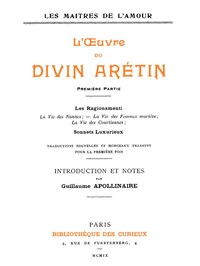
L'oeuvre du divin Arétin, première partie by Pietro Aretino
Let's be clear from the start: Pietro Aretino was a rockstar. In the 1500s, while Michelangelo was painting the Sistine Chapel, Aretino was writing plays that mocked the clergy, publishing letters that detailed the private lives of nobles, and composing poems that were, well, not for polite company. This collection, 'The Work of the Divine Aretino, Part One,' gathers a lot of that early, explosive material. It's not one single story, but a showcase of his audacious voice across different forms.
The Story
There isn't a linear plot. Think of it more like a greatest hits album from history's most fearless critic. You get his early comedies, like The Courtesan, which pull back the curtain on the scams and schemes of Roman high society. You'll find his infamous 'Pasquinade' poems—anonymous, satirical verses he'd nail to public statues, brutally lampooning the powerful. The heart of it is his voice: sharp, witty, merciless, and often deeply human. He wrote about prostitutes, corrupt cardinals, greedy merchants, and vain artists with the same unblinking eye. He wasn't just tearing things down; he was holding up a mirror to a world of incredible hypocrisy, and laughing while he did it.
Why You Should Read It
I loved this book because it completely shatters the dusty, distant image we often have of the past. Aretino feels shockingly modern. His complaints about flatterers, corrupt politicians, and two-faced friends are things we could say today. His humor is earthy and direct. Reading his work, you get the thrill of listening in on the most interesting, dangerous conversation in Rome. He wasn't a saint—he was a opportunist and a provocateur—but his commitment to speaking his truth, no matter the cost, is magnetic. It's a reminder that great art isn't always pretty; sometimes it's loud, messy, and deliberately offensive.
Final Verdict
This is perfect for anyone tired of the same old classics and hungry for something with real bite. It's for history buffs who want the uncensored version, for lovers of satire who appreciate a master at work, and for readers who enjoy characters that leap off the page—even if that character is the author himself. Be warned: the content is explicit and politically incorrect by any century's standards. But if you're ready for a walk on the wild side of the Renaissance, guided by its most infamous and brilliant troublemaker, you absolutely need to meet the 'Divine' Aretino.
This work has been identified as being free of known copyright restrictions. Thank you for supporting open literature.
Patricia Moore
1 year agoBefore I started my latest project, I read this and the historical context mentioned in the early chapters is quite enlightening. This should be on the reading list of every serious professional.
Robert Jones
1 month agoThought-provoking and well-organized content.
Brian Harris
1 year agoHigh quality edition, very readable.
Robert Lee
7 months agoAfter hearing about this author multiple times, the emotional weight of the story is balanced perfectly. This story will stay with me.








David Wilson
10 months agoGiven the current trends in this field, the way it challenges the status quo is both daring and well-supported. Simple, effective, and authoritative – what else could you ask for?