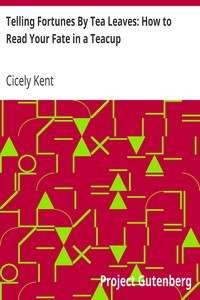
Telling Fortunes By Tea Leaves: How to Read Your Fate in a Teacup by Cicely Kent
Let's be clear from the start: 'Telling Fortunes By Tea Leaves' is not a novel. There's no plot twist or central mystery to unravel. Instead, think of it as a friendly, illustrated manual for a forgotten parlor game. Cicely Kent acts as your patient guide, walking you through the entire quaint process from start to finish.
The Story
The 'story' here is the ritual itself. Kent begins with the basics: what kind of tea to use (loose-leaf, of course!), the ideal cup shape, and how to brew and drink it properly to leave a good pattern of leaves behind. Then comes the fun part. She teaches you how to swirl the cup, tip out the excess liquid, and finally, how to 'read' the landscape of leaves left clinging to the sides. The bulk of the book is a dictionary of symbols—what it means if the leaves form a shape like a heart, a snake, a tree, or a ring. She explains how their position in the cup relates to timing (near the rim for the immediate future, near the bottom for things far off). It's a simple, step-by-step guide to creating your own little moment of divination.
Why You Should Read It
I loved this book for its sheer charm and its call to mindfulness. In our fast-paced, screen-dominated world, this practice forces you to slow down. You can't rush a proper cup of loose-leaf tea. The act of quietly studying the patterns is a form of meditation, a chance to let your mind wander and make its own connections. Kent doesn't present this as a serious, infallible science, but as a lighthearted tool for introspection. The symbols often serve as prompts—seeing an 'anchor' might make you think about stability, while a 'bird' could spark thoughts about freedom or news. It's less about telling the future and more about having a conversation with your present self.
Final Verdict
This book is a perfect little treat for the curious, the nostalgic, and anyone who enjoys life's small rituals. It's for the person who loves the idea of a themed tea party, the creative soul looking for a unique journaling prompt, or simply someone who wants to add a five-minute wonder to their day. If you're a hardcore skeptic looking for proof of the supernatural, you'll be disappointed. But if you're open to a bit of historical whimsy and a charming excuse to be more present with your cuppa, you'll find 'Telling Fortunes By Tea Leaves' to be an utterly delightful and surprisingly insightful companion.
The copyright for this book has expired, making it public property. It is now common property for all to enjoy.
Emma Lewis
4 months agoFinally a version with clear text and no errors.
Steven Williams
2 years agoHonestly, the emotional weight of the story is balanced perfectly. Absolutely essential reading.
Robert Flores
1 year agoThis is one of those stories where the storytelling feels authentic and emotionally grounded. A valuable addition to my collection.
Michelle Anderson
11 months agoVery interesting perspective.


Patricia Taylor
4 months agoTo be perfectly clear, it challenges the reader's perspective in an intellectual way. I will read more from this author.