
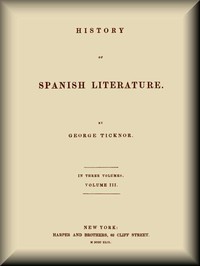
History of Spanish Literature, vol. 3 (of 3) by George Ticknor
George Ticknor's final volume picks up where the Spanish Golden Age left off. It covers the 18th and early 19th centuries, a period often skipped over in popular history. The story here isn't about a single plot, but about the life of a nation's literature. Ticknor shows us a Spain that's intellectually restless. After the incredible achievements of the previous century, writers and thinkers were asking: 'What now?'
The Story
The book follows Spanish letters through a time of great change. The Bourbon kings brought French influences. New ideas from the Enlightenment filtered in. There were fierce debates between those who wanted to modernize Spanish writing and those who wanted to protect its traditional roots. Ticknor introduces us to playwrights, poets, and scholars who navigated this shift. He traces the path from the formal, controlled style of the 1700s to the beginnings of Romanticism in the 1800s, setting the stage for a new cultural revival. It's the story of a literature finding its footing again.
Why You Should Read It
What makes this volume special is Ticknor's perspective. He wasn't just a historian in a library; he traveled through Spain, met writers, and collected books firsthand. You feel his personal connection to the material. He makes you care about this 'in-between' era. You start to see the 18th century not as a boring decline, but as a necessary period of questioning and transition. He gives credit to figures who kept the flame alive, preparing the ground for the generations that followed. It's a reminder that cultural history isn't just about the peaks—it's also about the valleys that connect them.
Final Verdict
This is a book for the curious reader who already loves Spanish culture—maybe you've read Don Quixote or seen a play by Lope de Vega—and wants to understand the full story. It's perfect for history buffs who enjoy seeing how ideas travel and change. Because it's the third volume, I'd recommend starting with the earlier ones if you can, but Ticknor writes with such clarity that a determined reader could jump in here. It's not a light read, but it's a rewarding one. You'll finish it with a much deeper appreciation for how a great literary tradition renews itself.
This book is widely considered to be in the public domain. Thank you for supporting open literature.
Donna Young
1 year agoSolid story.
George Jackson
1 year agoBased on the summary, I decided to read it and it challenges the reader's perspective in an intellectual way. Thanks for sharing this review.
Michelle Harris
5 months agoTo be perfectly clear, the content flows smoothly from one chapter to the next. Exactly what I needed.
Charles Scott
1 year agoTo be perfectly clear, the storytelling feels authentic and emotionally grounded. I will read more from this author.

Robert Ramirez
1 year agoSurprisingly enough, it challenges the reader's perspective in an intellectual way. Worth every second.