
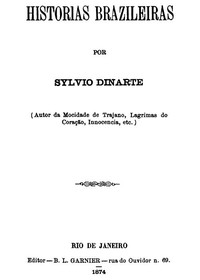
Historias Brazileiras by Visconde de Alfredo d'Escragnolle Taunay Taunay
Alfredo d'Escragnolle Taunay, a Viscount who also fought in a war and painted, wrote 'Historias Brazileiras' in the late 1800s. It's a collection of short stories that act like snapshots of Brazilian life during a time of huge change—the decline of the monarchy, the slow end of slavery, and the push into the country's vast interior.
The Story
There isn't one plot. Instead, each story is a different scene from the same sprawling national drama. You might follow an indigenous guide leading a lost expedition through the jungle in one tale, and in the next, be in a drawing room where a family debates politics. Some stories are tense adventures about survival on the frontier. Others are quiet, sad looks at the relationships between enslaved people and their owners. Taunay moves from the ballrooms of Rio to the harsh backcountry, showing how all these different worlds were connected, often in painful ways. The book feels less like a novel and more like walking through a gallery of vivid, sometimes unsettling, portraits.
Why You Should Read It
I picked this up expecting old-fashioned, stuffy writing. I was wrong. Taunay has a journalist's eye for detail. He describes the sounds of the forest or the tension in a crowded street so well you can almost feel the humidity. What struck me most was his empathy. While he was part of the elite, his stories often center on those with the least power. He doesn't glorify the past. He shows its contradictions—the beauty of the land alongside the brutality of its conquest, the ideals of a new nation clashing with the reality of deep inequality. It made me think about how countries build their identities, and who gets to tell that story.
Final Verdict
This book is perfect for anyone who loves historical fiction but wants to go beyond kings and battles. It's for readers curious about Brazil's soul and how its past shapes its present. Because the stories are short, it's easy to dip in and out. Just be ready—it's not a light escape. It's a thoughtful, often sobering look at a nation's growing pains, written by someone who loved his country enough to show its flaws. If you enjoy writers like Machado de Assis or want to understand Latin American literature's roots, start here.
This publication is available for unrestricted use. Enjoy reading and sharing without restrictions.
Sarah Garcia
9 months agoCompatible with my e-reader, thanks.
Margaret Miller
8 months agoI came across this while browsing and it manages to explain difficult concepts in plain English. I would gladly recommend this title.
Donna White
2 years agoI didn't expect much, but the character development leaves a lasting impact. I learned so much from this.







Ethan Martin
1 year agoEssential reading for students of this field.